


Understanding Social Security’s Role in Your Retirement Strategy
For over nine decades, Social Security has served as a cornerstone government initiative supporting retirees across America. With demographic shifts and an expanding elderly population, questions about the program’s long-term viability have become increasingly prominent. Understanding that Social Security represents just one element of comprehensive retirement preparation is essential. Given today’s economic landscape and policy debates, grasping all aspects of retirement readiness is crucial for meeting your long-term financial objectives.
Regardless of your proximity to retirement, gaining insight into Social Security’s place within your broader financial strategy should begin now. To properly assess both potential benefits and risks, familiarity with the program’s origins, present-day obstacles, and available planning approaches is necessary.
The origins and development of Social Security
Created in 1935 amid the Great Depression under the leadership of President Franklin D. Roosevelt, Social Security was intended as a protective measure for aging Americans. From its inception providing limited payments to a select population, the program has grown into an expansive framework supporting not only retirees but also disabled individuals and their dependents. Currently, Social Security income constitutes a substantial share of retirement resources for countless American households.
What obstacles does Social Security face in the current environment? The program functions largely through a pay-as-you-go model. Under this structure, payroll contributions from today’s workforce fund benefits for current recipients. Put simply, the taxes deducted from your paycheck don’t accumulate for your future benefits but instead support someone currently receiving Social Security payments.
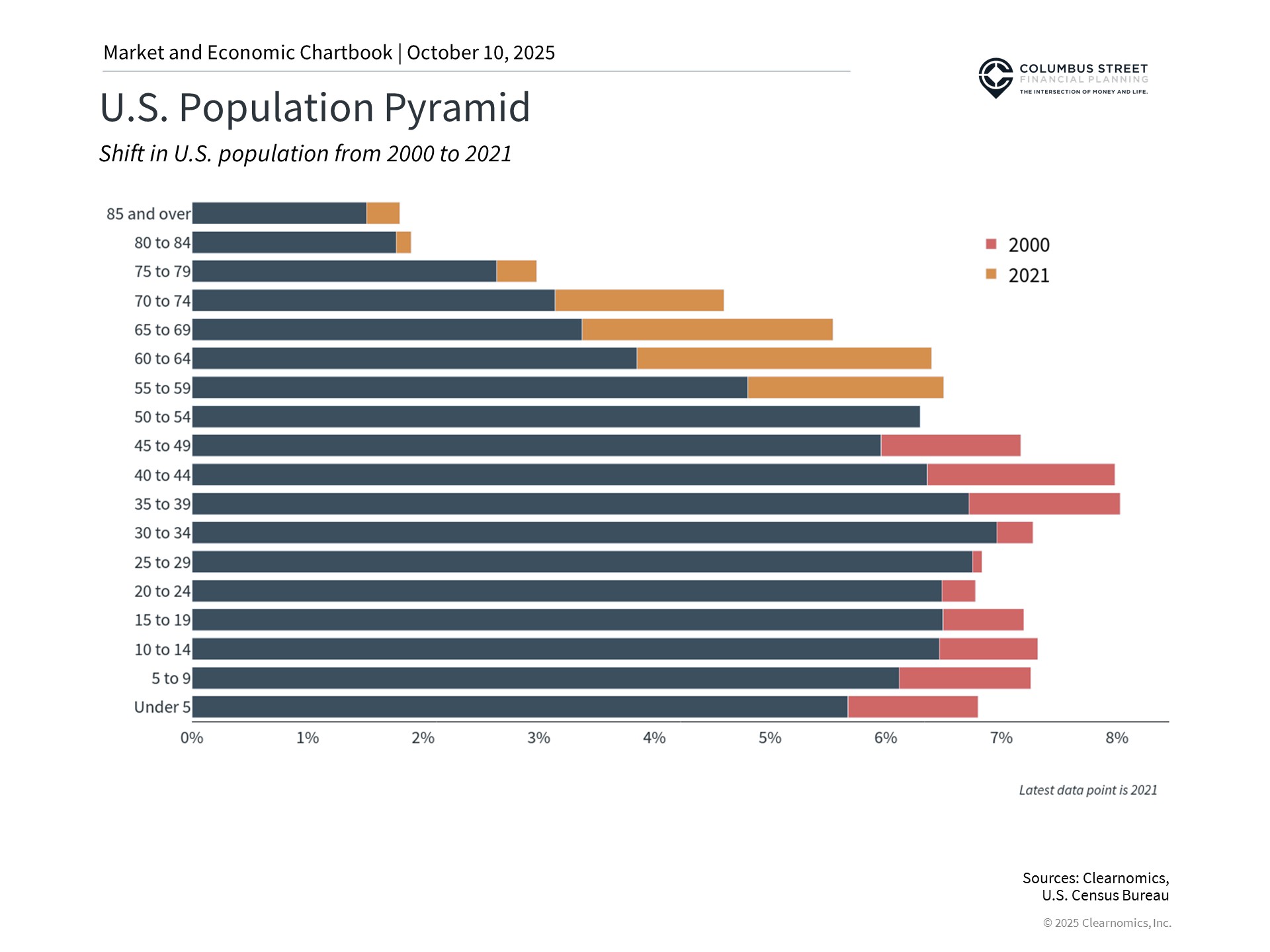
This framework functioned effectively when worker-to-beneficiary ratios remained favorable throughout the majority of the 20th century. Yet changing demographics have resulted in fewer active workers supporting the program while retiree numbers climb. In 1940, the ratio stood at 42 workers for every beneficiary. That figure has dropped to approximately 2.8 workers per recipient today, with projections indicating further decline as the population continues aging and birth rates remain subdued.
Numerous forecasts have attempted to predict when Social Security trust fund reserves will be exhausted. According to the most recent assessment from the Social Security Board of Trustees, current reserves should remain adequate through 2034, beyond which benefit reductions would become necessary. However, continuing payroll tax revenue would still support roughly 78% of promised benefits. Though specific timelines may vary, the fundamental issue persists: absent significant reforms, the trust funds may prove unable to deliver full scheduled benefits over the long term.
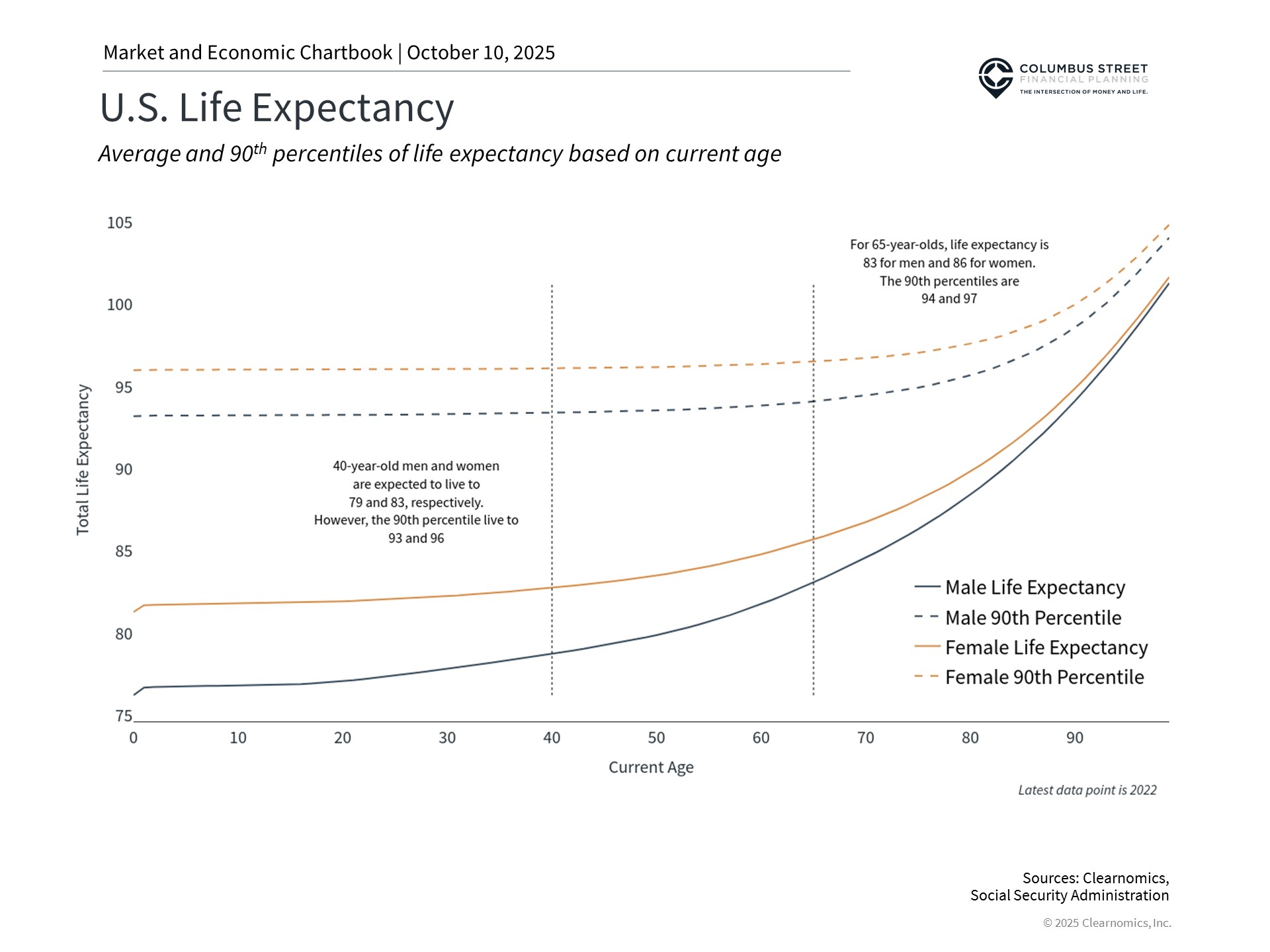
Increased longevity presents both opportunity and strain on Social Security reserves
Concerns about program sustainability are amplified by the national debt and budget deficit situation, with federal debt approaching $37 trillion amid ongoing deficits. Despite Social Security’s classification as “mandatory” spending, mounting pressure to reduce government expenditures introduces questions about potential congressional modifications to these programs going forward.
Naturally, potential remedies remain subject to heated political discourse, diminishing prospects for near-term resolution. Among suggested approaches are adjustments to benefit eligibility ages, expansion of the taxable earnings threshold, and enhanced fraud prevention measures. Regrettably, comprehensive long-term solutions to Social Security’s challenges remain elusive.
Examining how other developed nations have addressed comparable demographic pressures can provide useful context. Multiple European countries, including France and the UK, have raised retirement ages to alleviate system stress. Australia has implemented an alternative model through “means-testing,” which limits benefit eligibility based on asset and income criteria.
Although the projected 2034 depletion timeline remains several years distant, the imperative for solutions will intensify. Complete benefit elimination appears extremely improbable, yet ongoing funding pressures suggest modifications will likely prove necessary.
Key Planning Considerations for Retirement Preparation
On an individual level, thoughtful planning becomes essential for maintaining retirement readiness amid Social Security uncertainty. Optimal decisions vary based on your comprehensive financial situation, objectives, tax position, and additional factors.
Consider these critical elements:
The Timing Decision
Benefit eligibility begins at age 62, though claiming early results in permanently reduced monthly payments. Alternatively, postponing benefits until age 70 can enhance monthly payments by roughly 8% annually beyond full retirement age (between 66 and 67, based on birth year), per the Social Security Administration.
Conducting a breakeven calculation can illuminate whether postponement makes sense for your situation. Typically, surviving past your early 80s makes delaying worthwhile for maximizing lifetime benefit totals. This assessment shifts when considering the time value of money or alternative uses for those funds.
Income Bridge Approaches
The merits of delaying hinge significantly on your income sources during the waiting period. Many retirees utilize portfolio distributions as an income “bridge” until larger Social Security payments commence. This tactic proves especially beneficial for married couples, where optimizing the higher earner’s benefit establishes enhanced survivor protection.
Tax Considerations
Depending on your combined income level, up to 85% of Social Security benefits may face taxation. Future legislative modifications could potentially raise this threshold. Working with a qualified advisor on strategic distribution planning can help reduce the tax burden on your benefits.
Planning With Caution
Individuals earlier in their professional lives have greater time horizons for retirement preparation and more flexibility to adapt to Social Security uncertainties.
Consequently, younger professionals might develop retirement frameworks that don’t depend heavily on Social Security. This approach doesn’t require completely disregarding the program, but rather viewing potential benefits as supplemental income beyond personal savings rather than a primary foundation.
Monitor Legislative Developments
Policy modifications will probably emerge before trust fund reserves are depleted. Remaining current on proposed reforms enables timely plan adjustments. Potential changes encompass further full retirement age increases, benefit calculation methodology revisions, or payroll tax cap modifications.
Optimize Tax-Advantaged Savings
Given Social Security’s uncertain outlook, maximizing 401(k), IRA, and HSA contributions gains additional significance. These vehicles offer tax benefits that can help offset potentially diminished government benefits.
Preparing for Social Security’s Evolution Demands Thoughtful Strategy
Notwithstanding legitimate concerns, maintaining proper perspective remains important. Social Security has navigated funding difficulties previously, and political incentives to maintain the program remain substantial.
The sensible path involves neither assuming Social Security’s permanence nor entirely excluding it from retirement considerations. Rather, investors should acknowledge the program’s significance while positioning it as merely one element within a well-diversified retirement framework.
The bottom line? Through understanding Social Security’s structural challenges, you can construct a more robust retirement approach suitable for any life stage or career phase.
Important Disclosure: All Content is information of a general nature and does not address the circumstances of any particular individual or entity. This Content is for informational purposes only; you should not construe any such information or other material as legal, tax, investment, financial, or other advice as a specific recommendation or specific endorsement by Columbus Street. The information in this document is provided in good faith without any warranty and is intended for the recipient’s background information only. Columbus Street accepts no responsibility for loss arising from the use of the information contained herein. In exchange for using this Content, you agree not to hold Columbus Street liable for any possible claim for damages arising from any decision you make based on information or other Content made available to you. You alone assume the sole responsibility of evaluating the merits and risks associated with using any information or other Content provided by Columbus Street before making any decisions based on such information or other Content. You should consult with your tax advisor and financial professional before making any determination as to the appropriateness of any planning strategy indicated herein. Clearnomics, “The Role of Social Security in Financial Planning,” July 2025, www.clearnomics.com
Important Disclosure: All Content is information of a general nature and does not address the circumstances of any particular individual or entity. This Content is for informational purposes only; you should not construe any such information or other material as legal, tax, investment, financial, or other advice as a specific recommendation or specific endorsement by Columbus Street. The information in this document is provided in good faith without any warranty and is intended for the recipient’s background information only. Columbus Street accepts no responsibility for loss arising from the use of the information contained herein. In exchange for using this Content, you agree not to hold Columbus Street liable for any possible claim for damages arising from any decision you make based on information or other Content made available to you. You alone assume the sole responsibility of evaluating the merits and risks associated with using any information or other Content provided by Columbus Street before making any decisions based on such information or other Content. You should consult with your tax advisor and financial professional before making any determination as to the appropriateness of any planning strategy indicated herein.